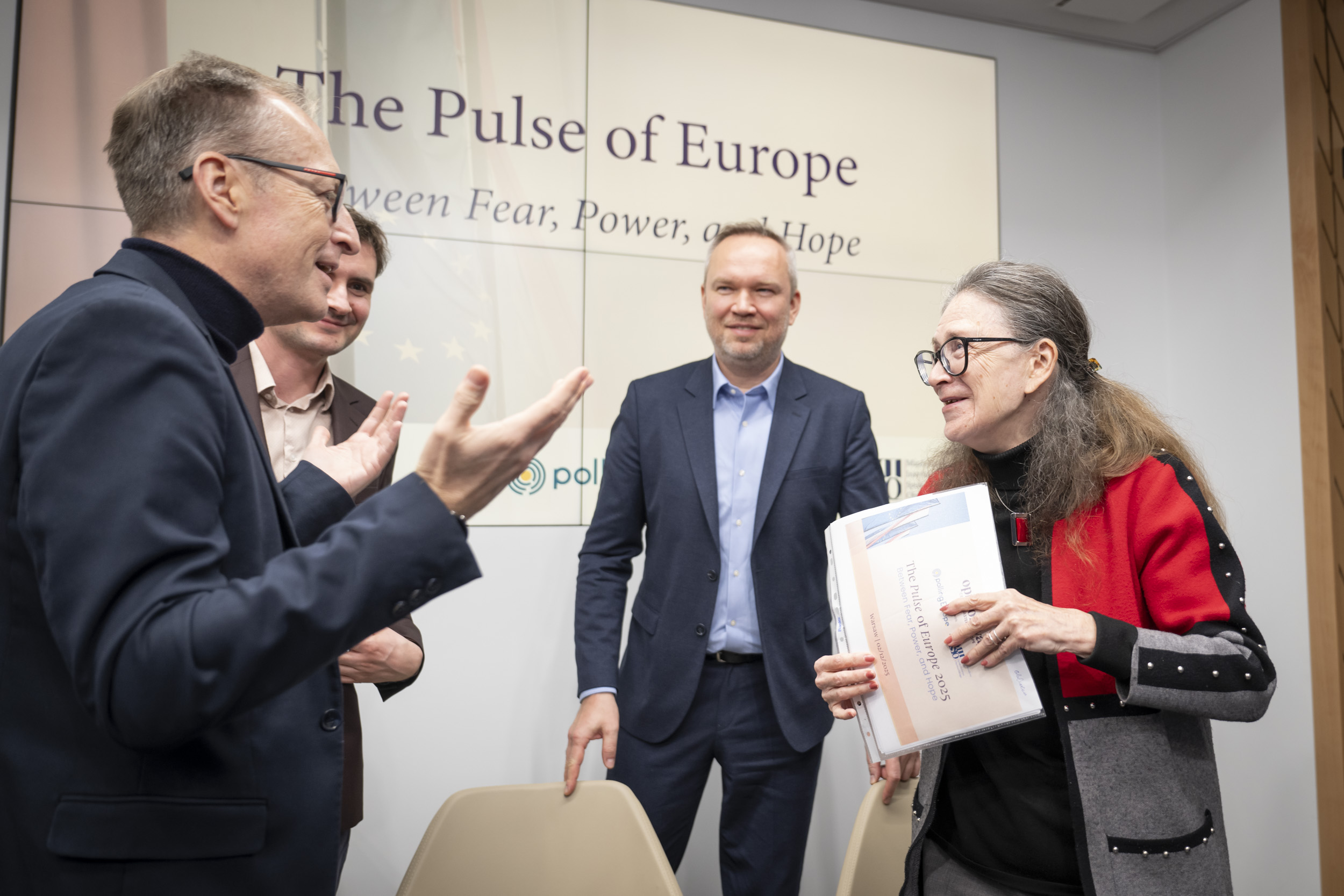

THE PULSE OF EUROPE 2025: BETWEEN FEAR, POWER, AND HOPE
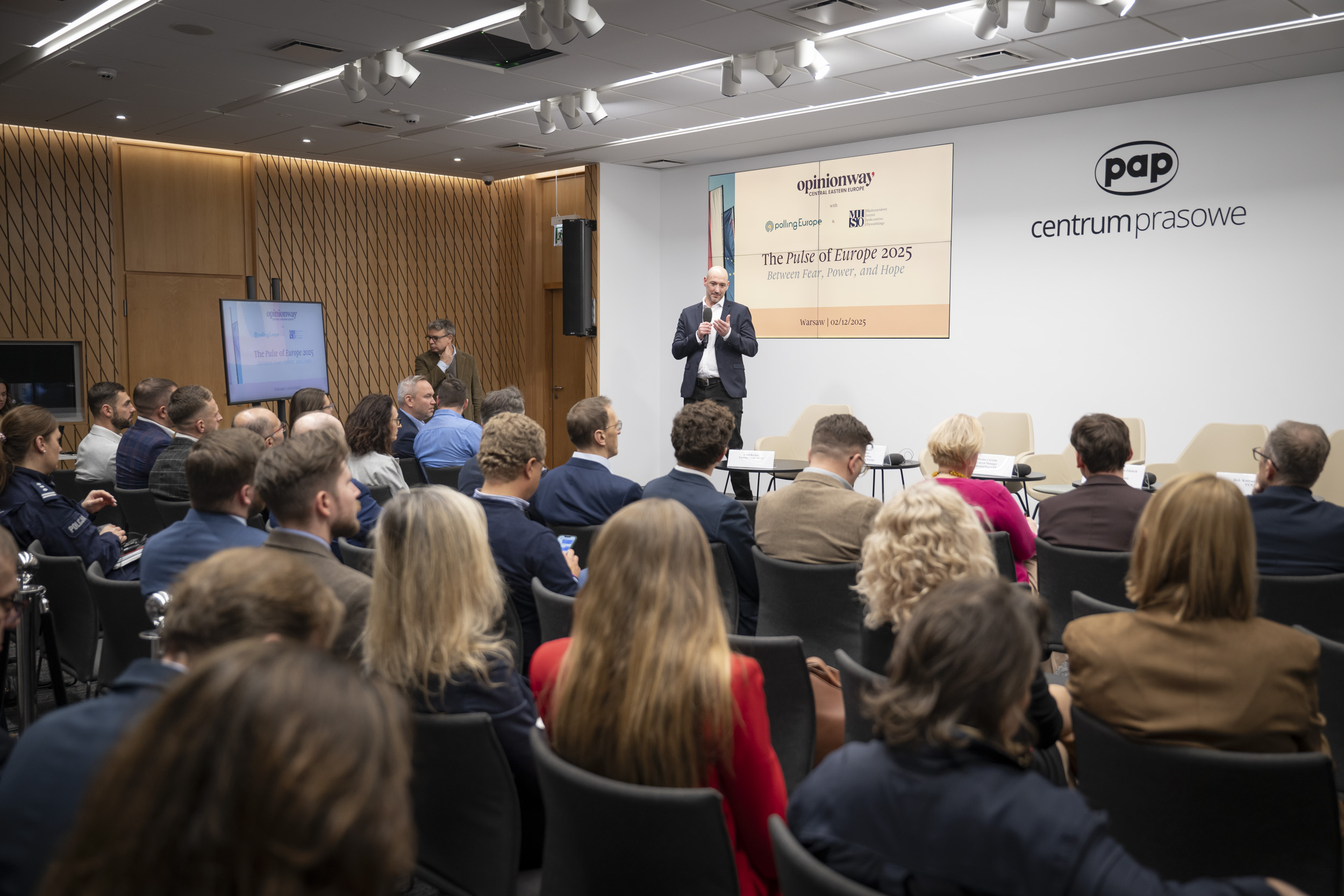
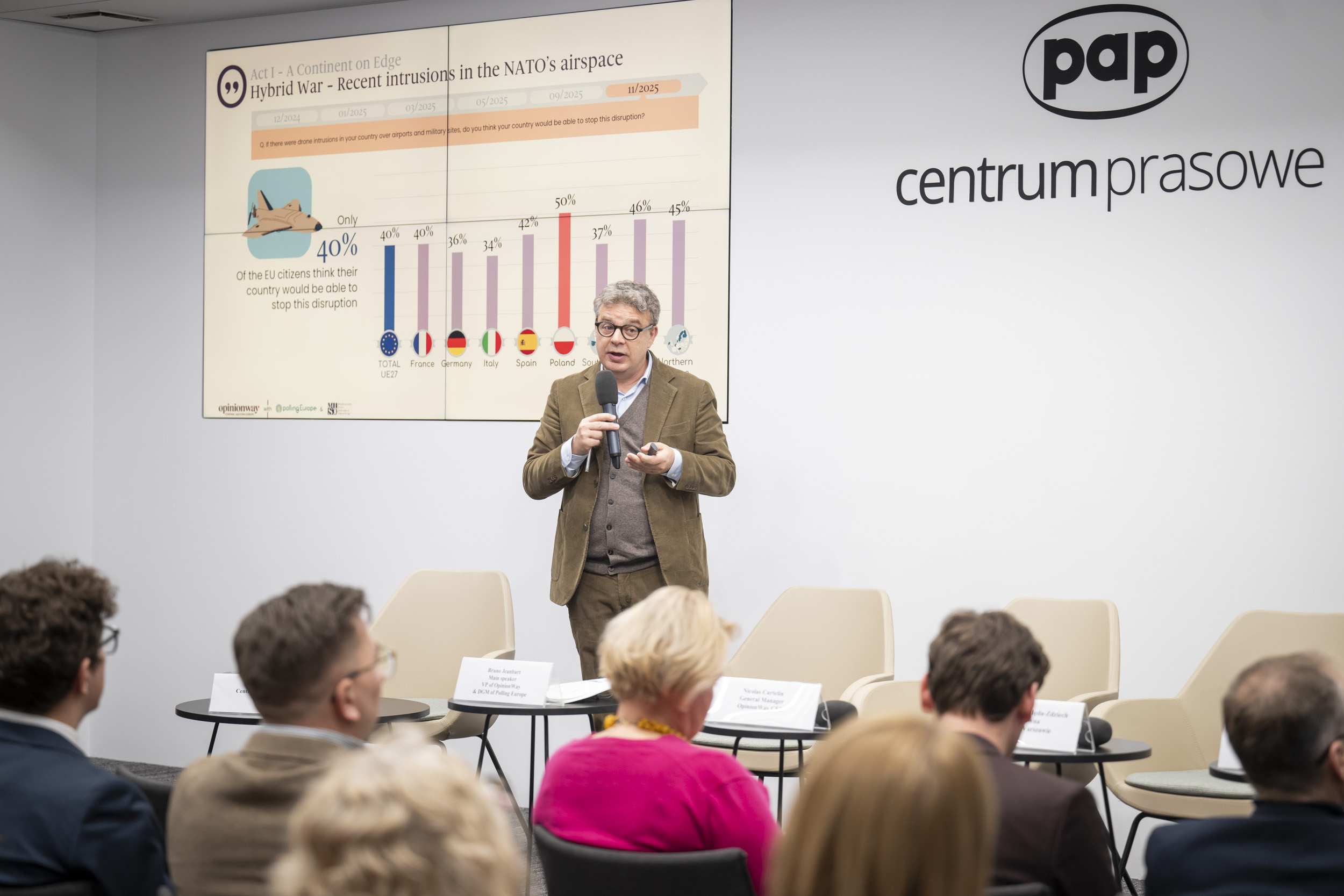
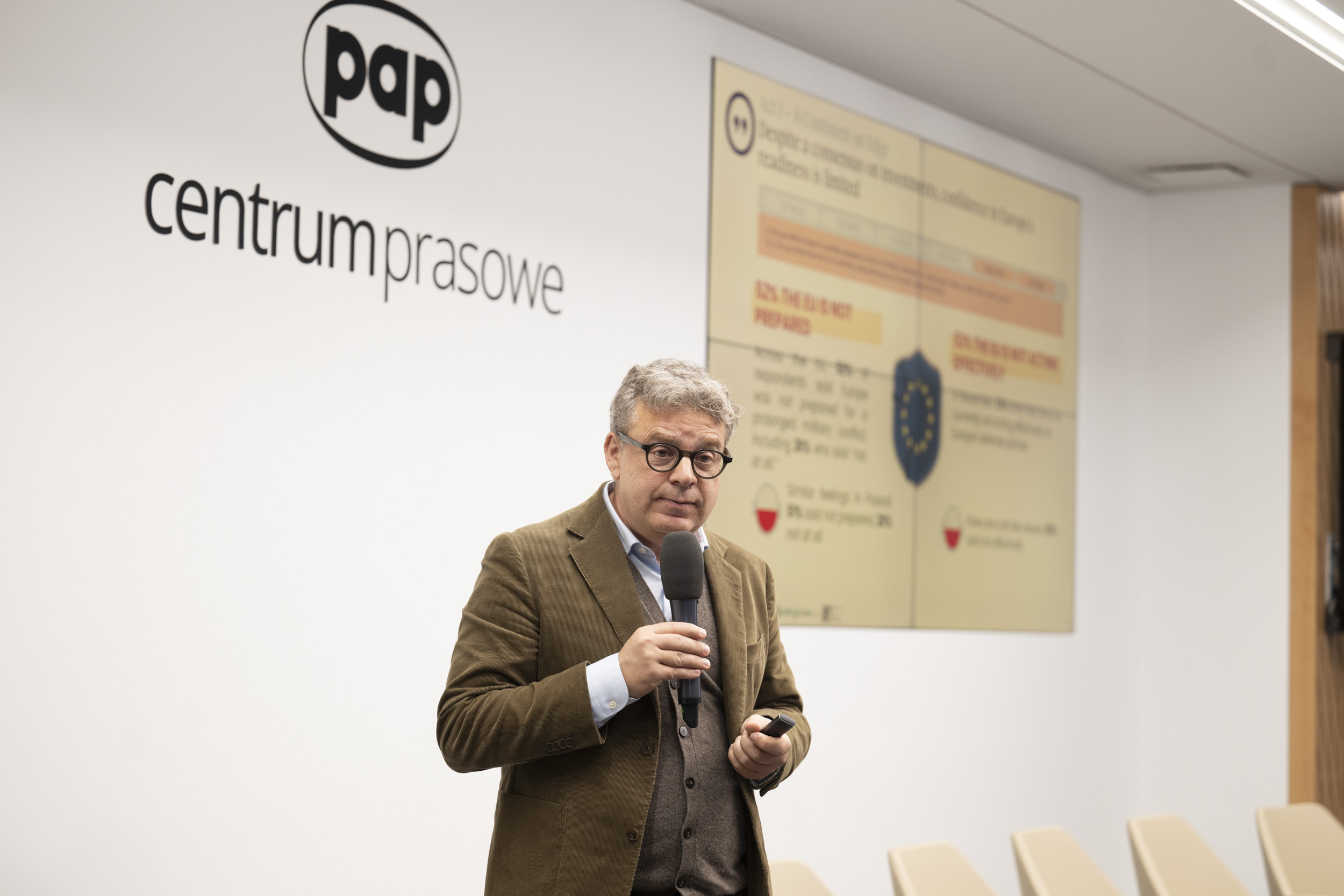
During the meeting, results of the latest edition of the Euroscope – Pulse of Europe 2025 study, a recurring public opinion survey conducted in 27 European Union countries by the Polling Europe and OpinionWay CEE consortium. The study shows how, amid the ongoing war in Ukraine, a crisis of trust, and accelerating digital transformation, the attitudes of Europeans, including Poles, are evolving in the areas of security, politics, the economy, and technology.
The results confirm the growing confidence of Poles regarding Poland’s status in Europe, while also revealing considerable caution and criticism toward the EU’s ability to respond to threats. As many as 93 percent of respondents in Poland support increasing defense investments, a figure that is the highest in the European Union, compared to the EU average of 73 percent. Poland also stands out for its belief in its own defense capabilities, especially in the context of rising technological military threats. At the same time, the study indicates that high levels of social concerns increase susceptibility to oversimplified messages and unverified narratives. Migration remains one of the main sources of concern: 71 percent of Poles associate it with risks of chaos and violence, and about one-third of respondents, similarly to other EU countries, declare susceptibility to unverified information.
In the international sphere, Poland’s image in Europe remains very strong, its best in years. According to the study, 76 percent of Europeans view Poland positively, and in Central and Southern Europe the share of positive opinions reaches around 80 percent. Poland is perceived as a dynamic economy, an important regional partner, and a significant pillar of the continent’s security architecture. At the same time, a gradual cooling down of attitudes toward the United States can be observed. Poland remains the most pro-American society in the EU; however the proportions of positive and negative opinions are beginning to even out, which could signal a more pragmatic approach to transatlantic relations.
The study also shows a high level of economic optimism and readiness to adopt new technologies. Poles report higher-than-average satisfaction with their material situation compared to the EU average and are among the most open to the development of artificial intelligence, while also supporting stronger European regulations and technological autonomy. The results suggest a growing awareness of the importance of technology for national, economic, and citizen security.
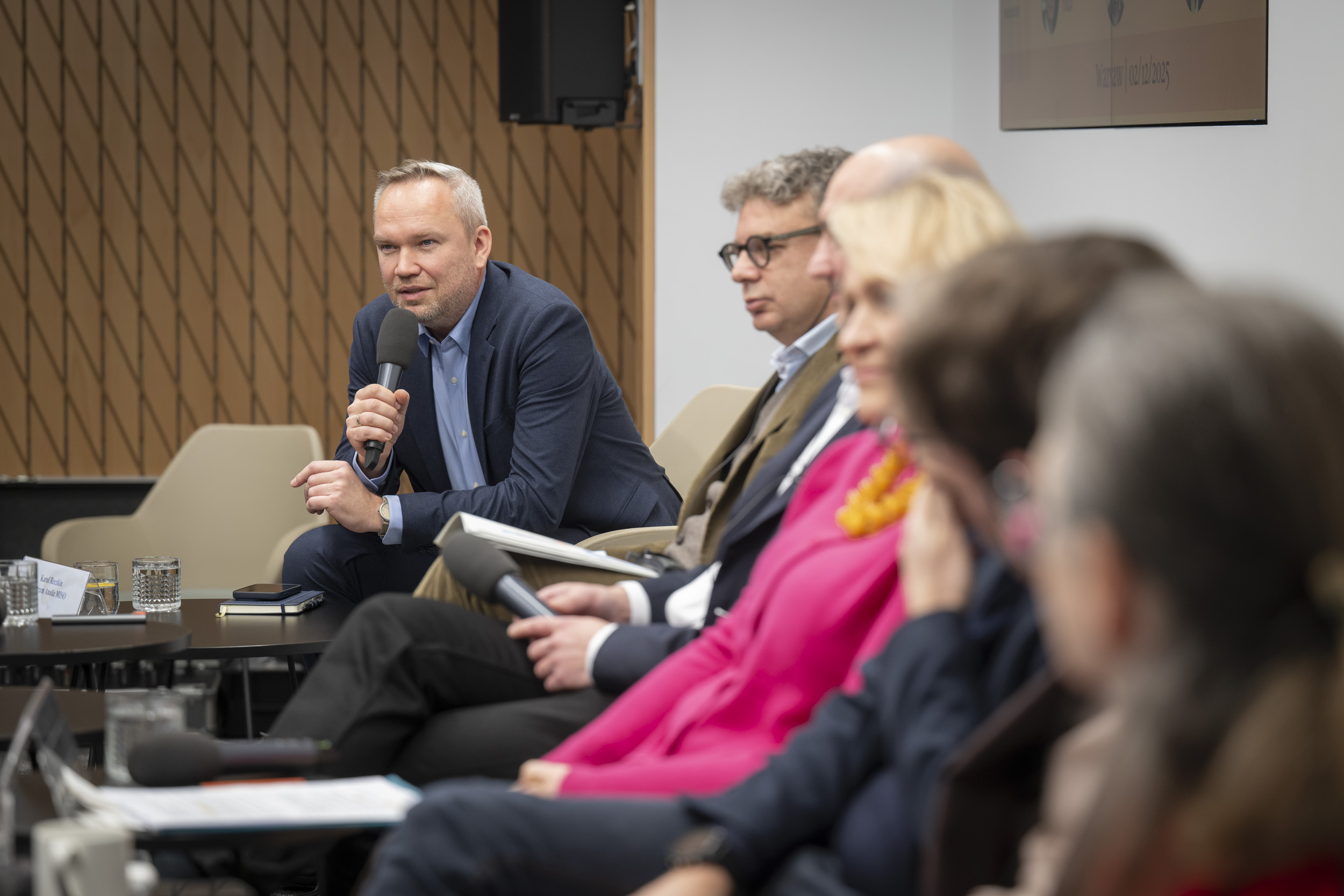
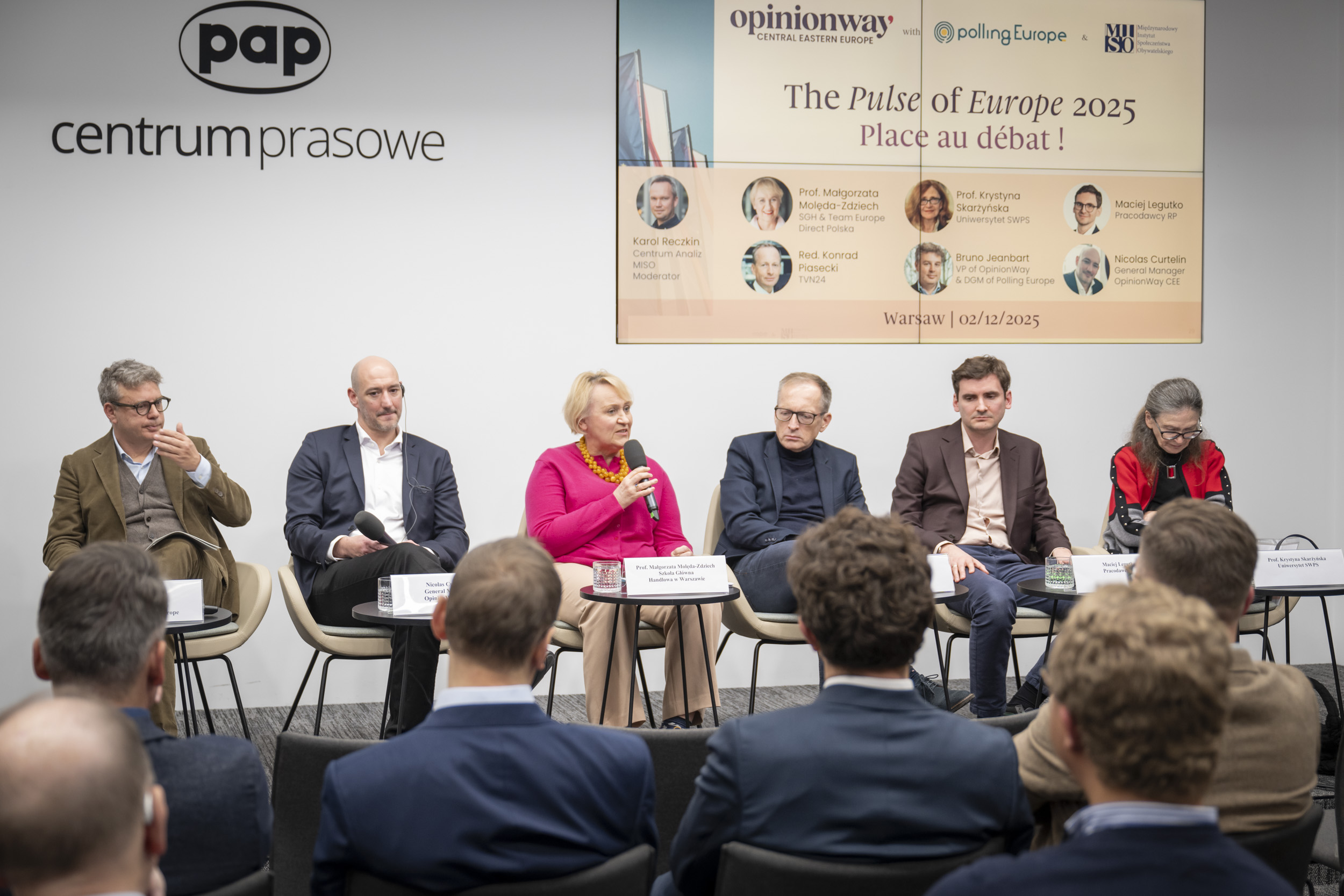
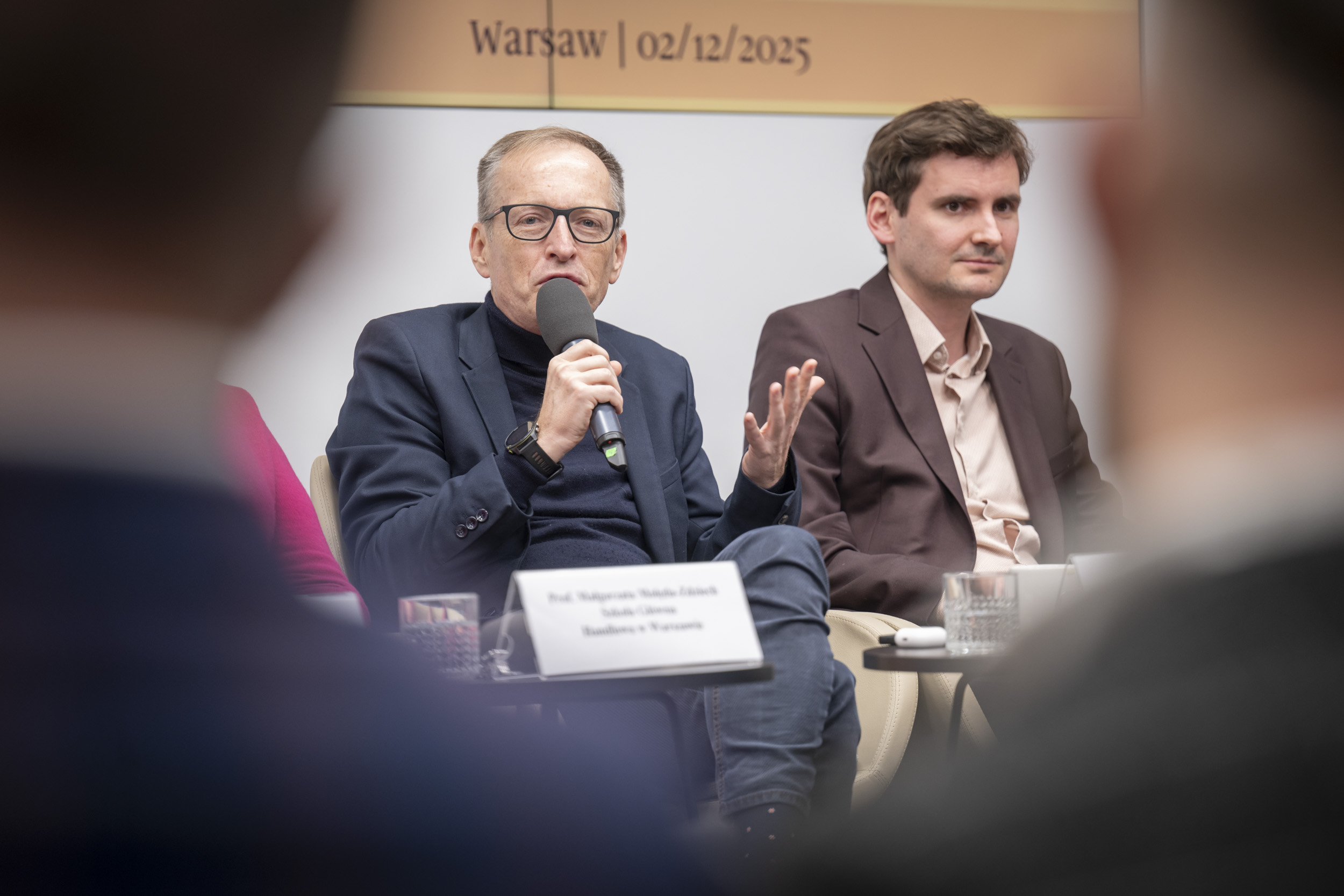
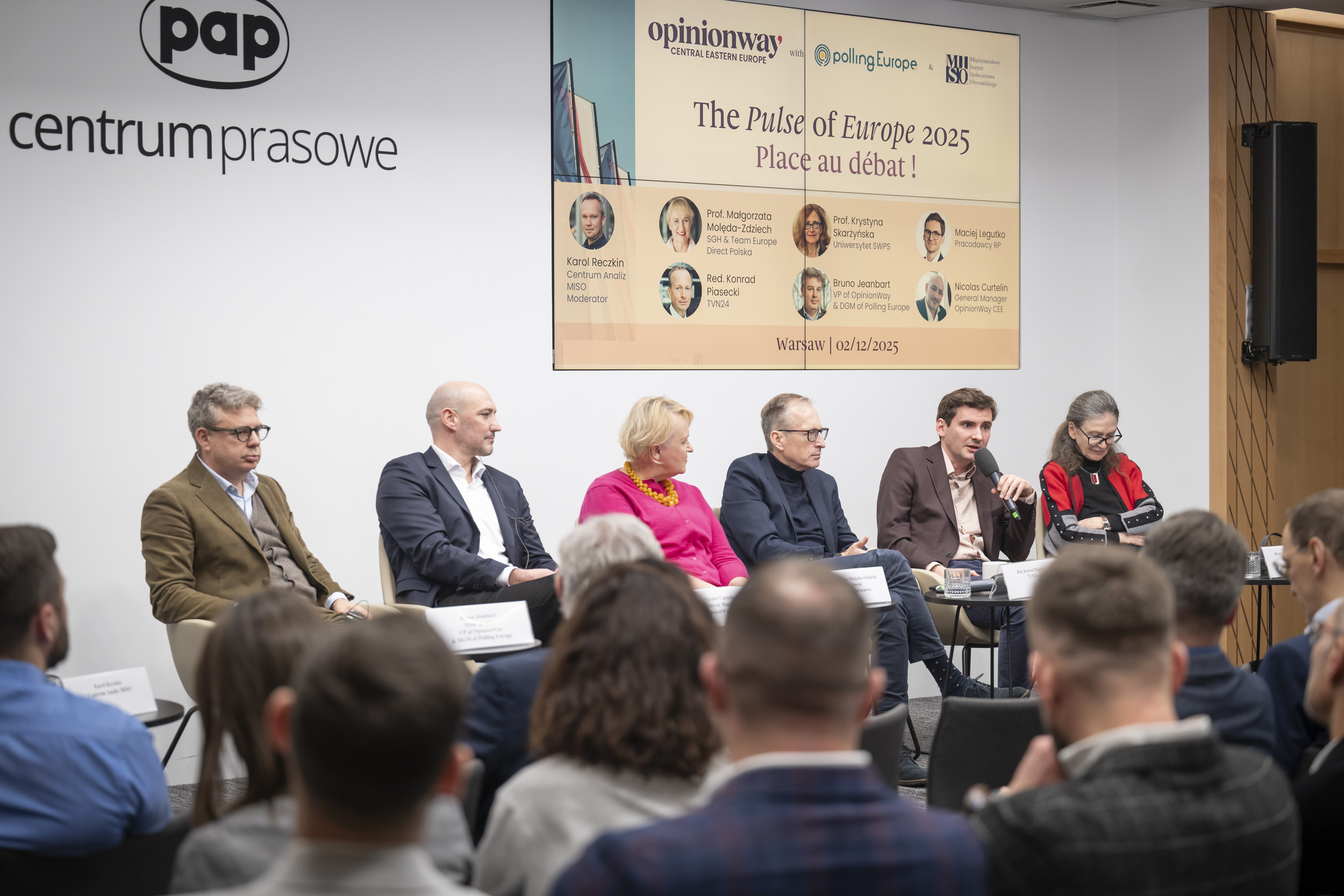
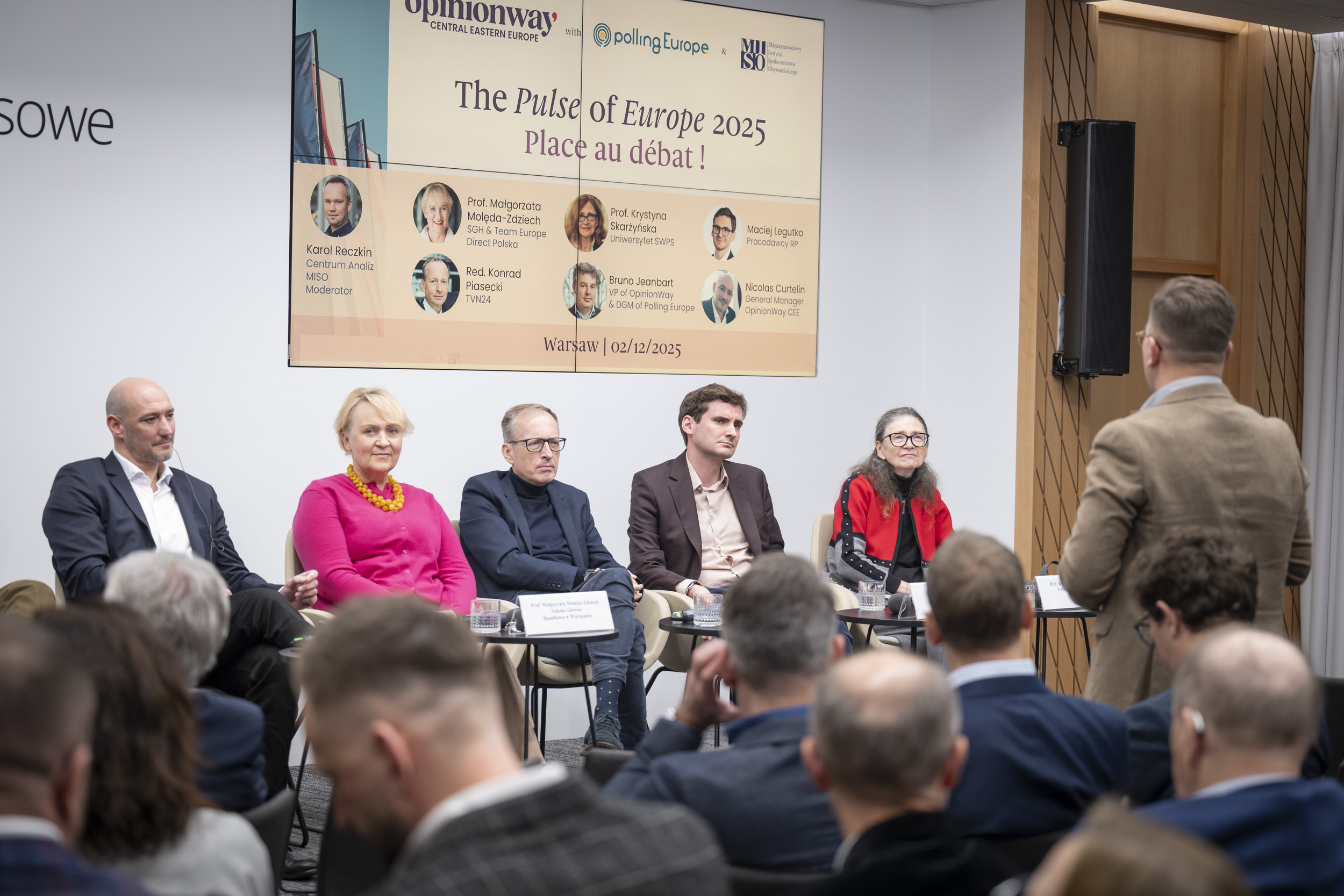
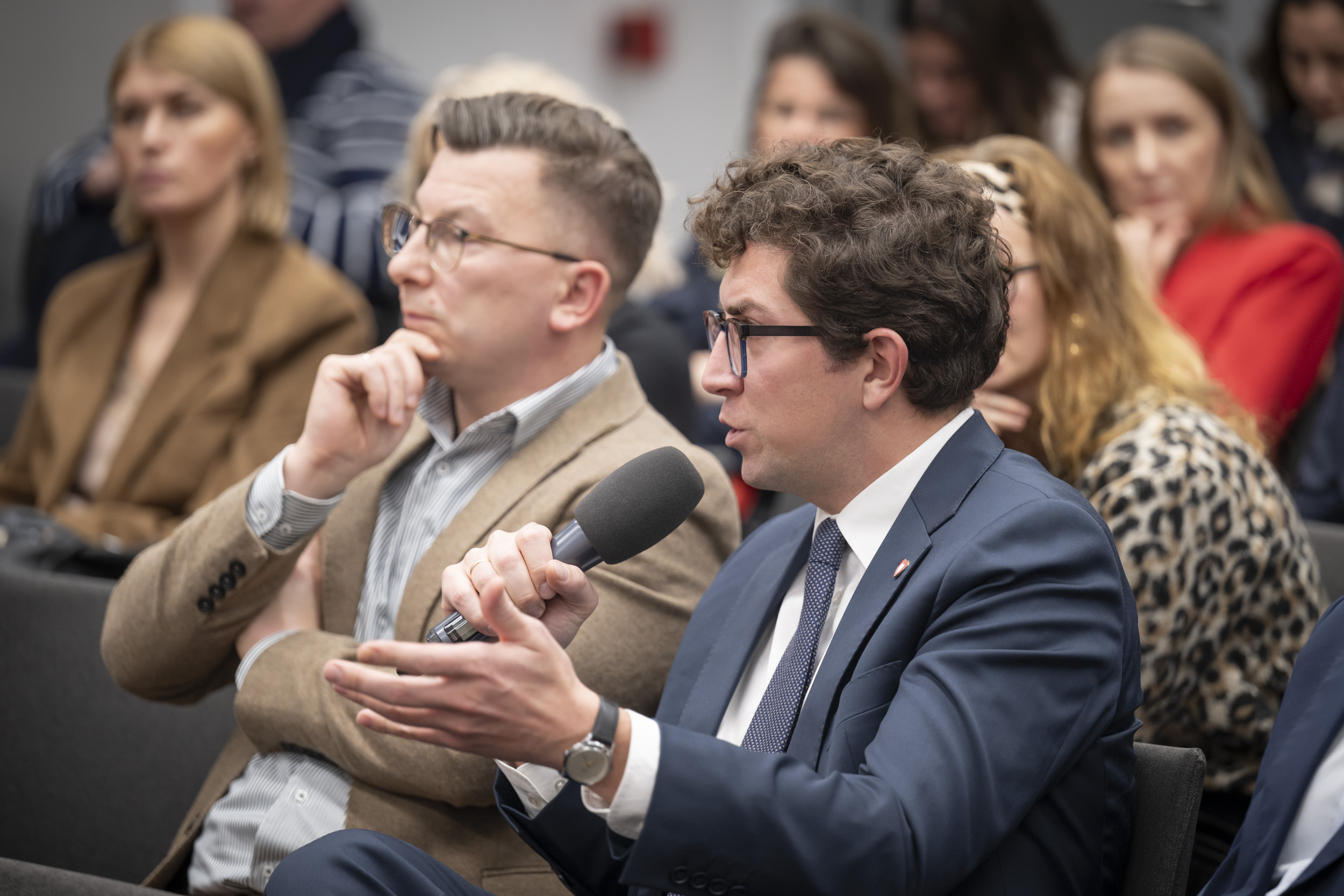
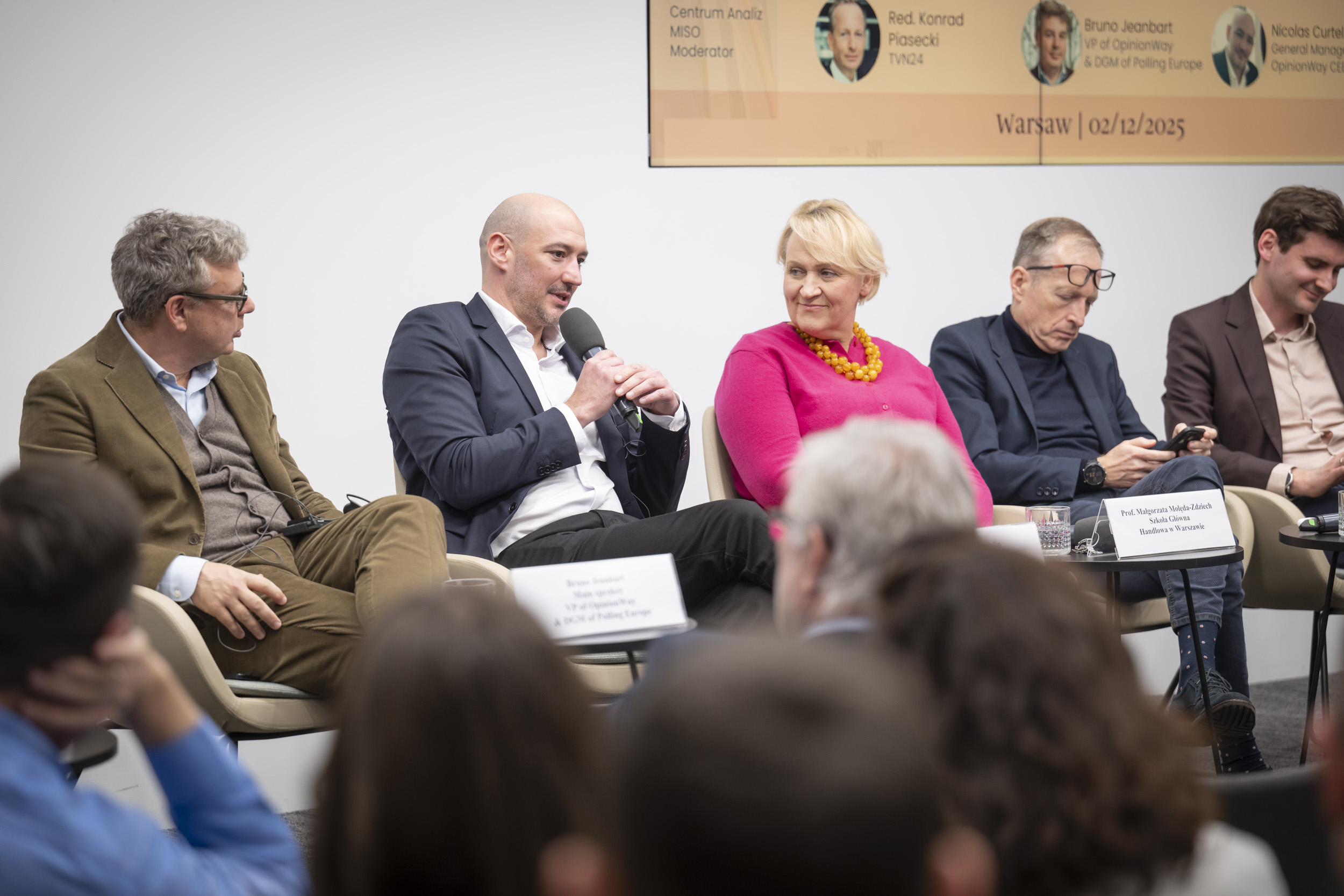
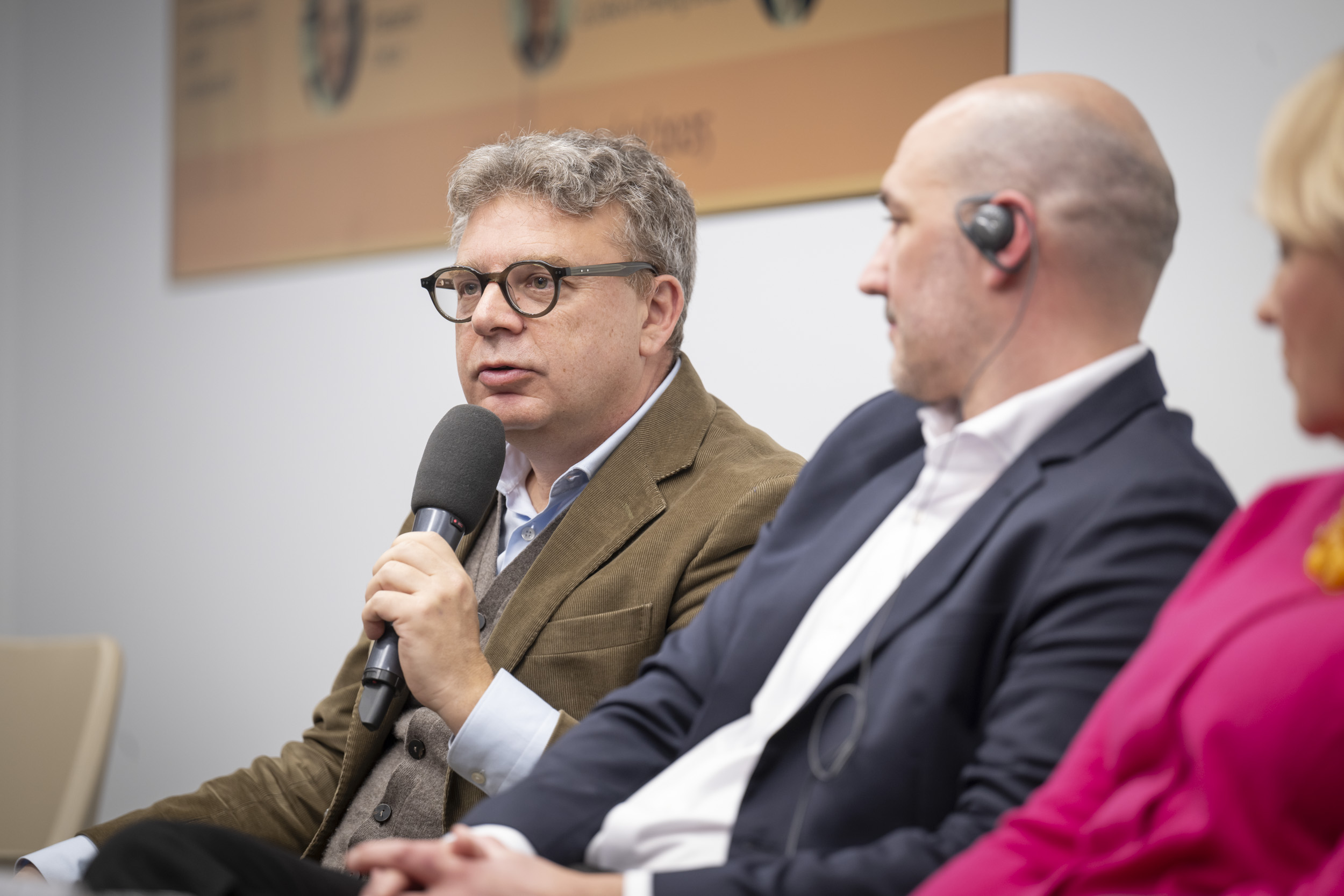
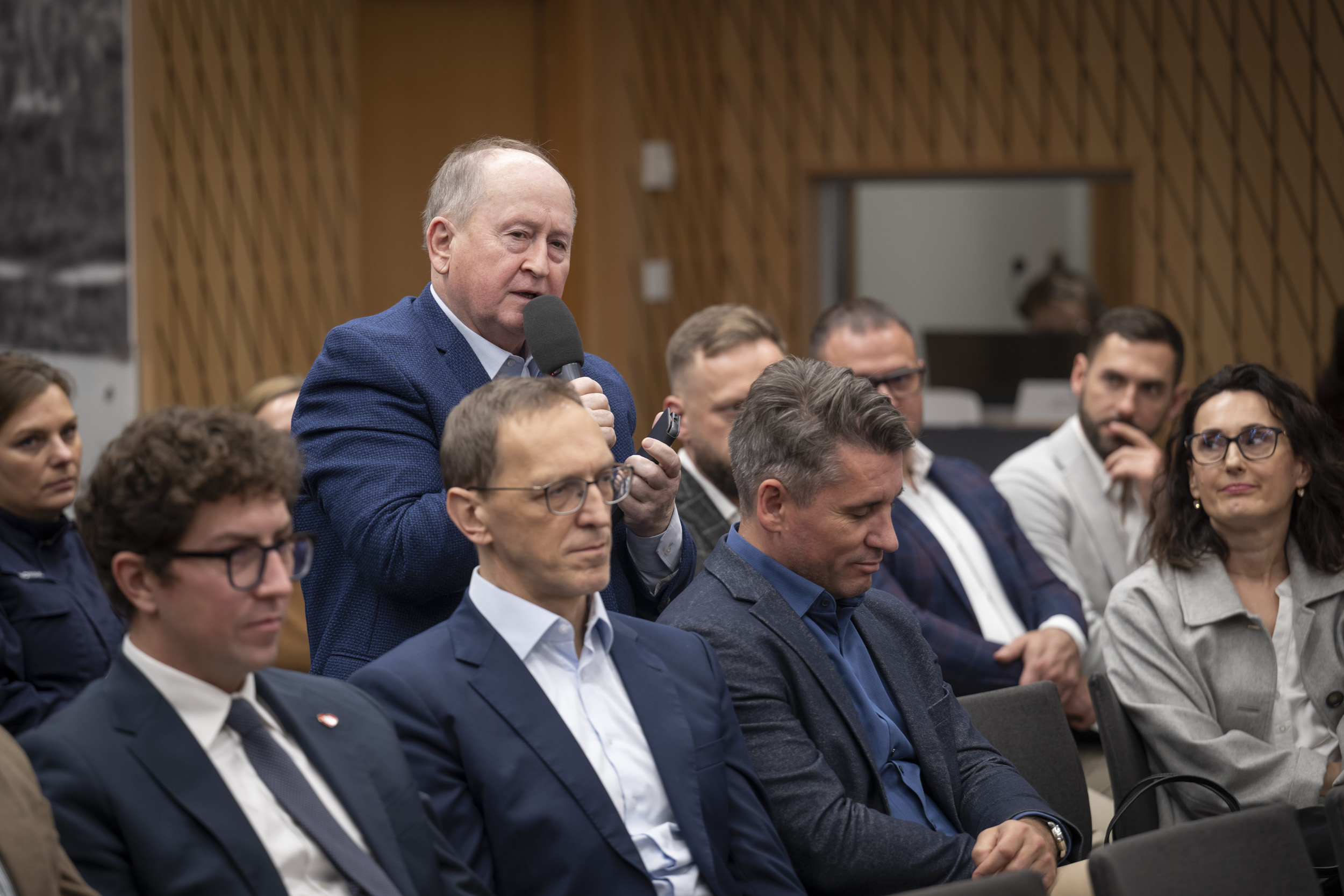
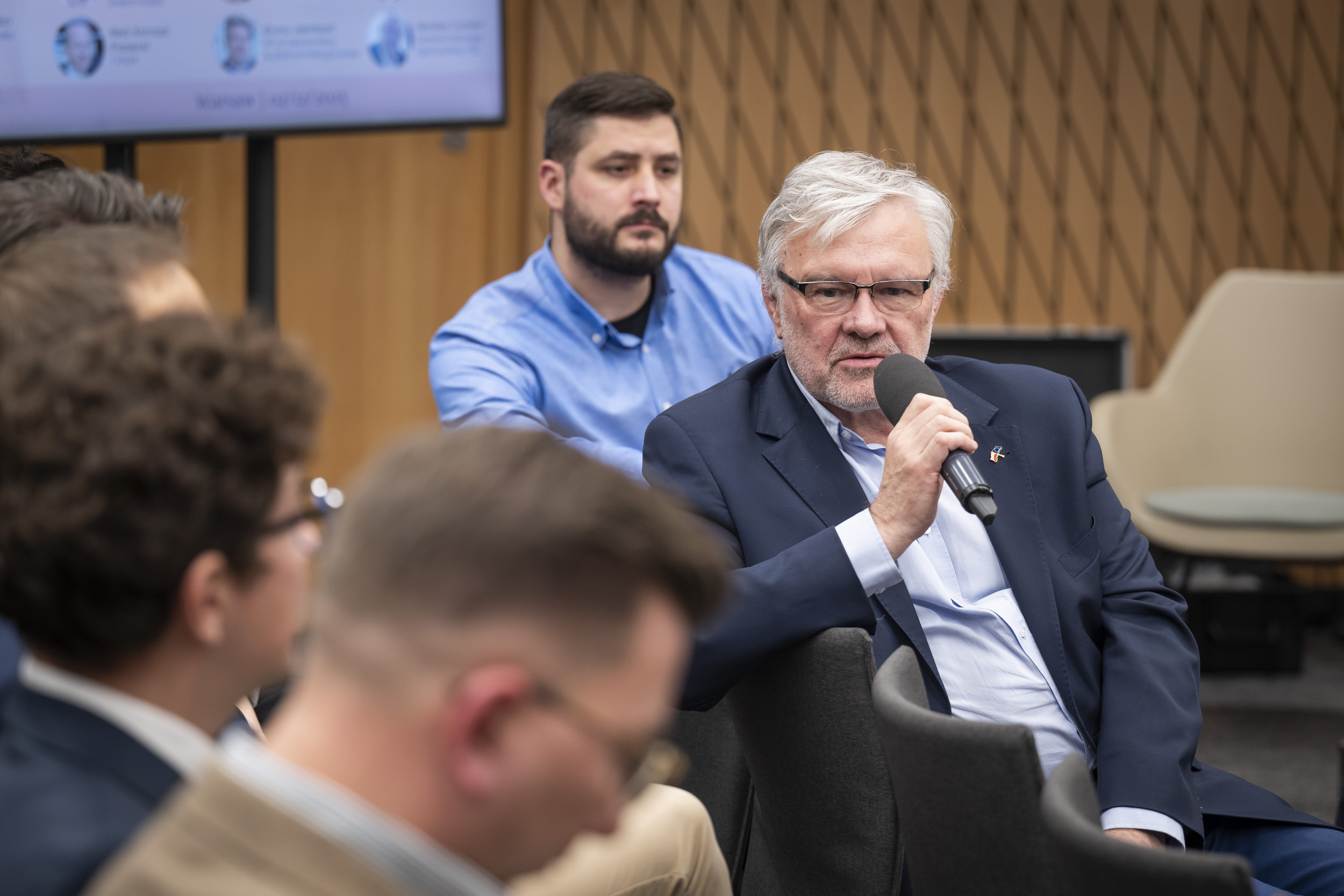
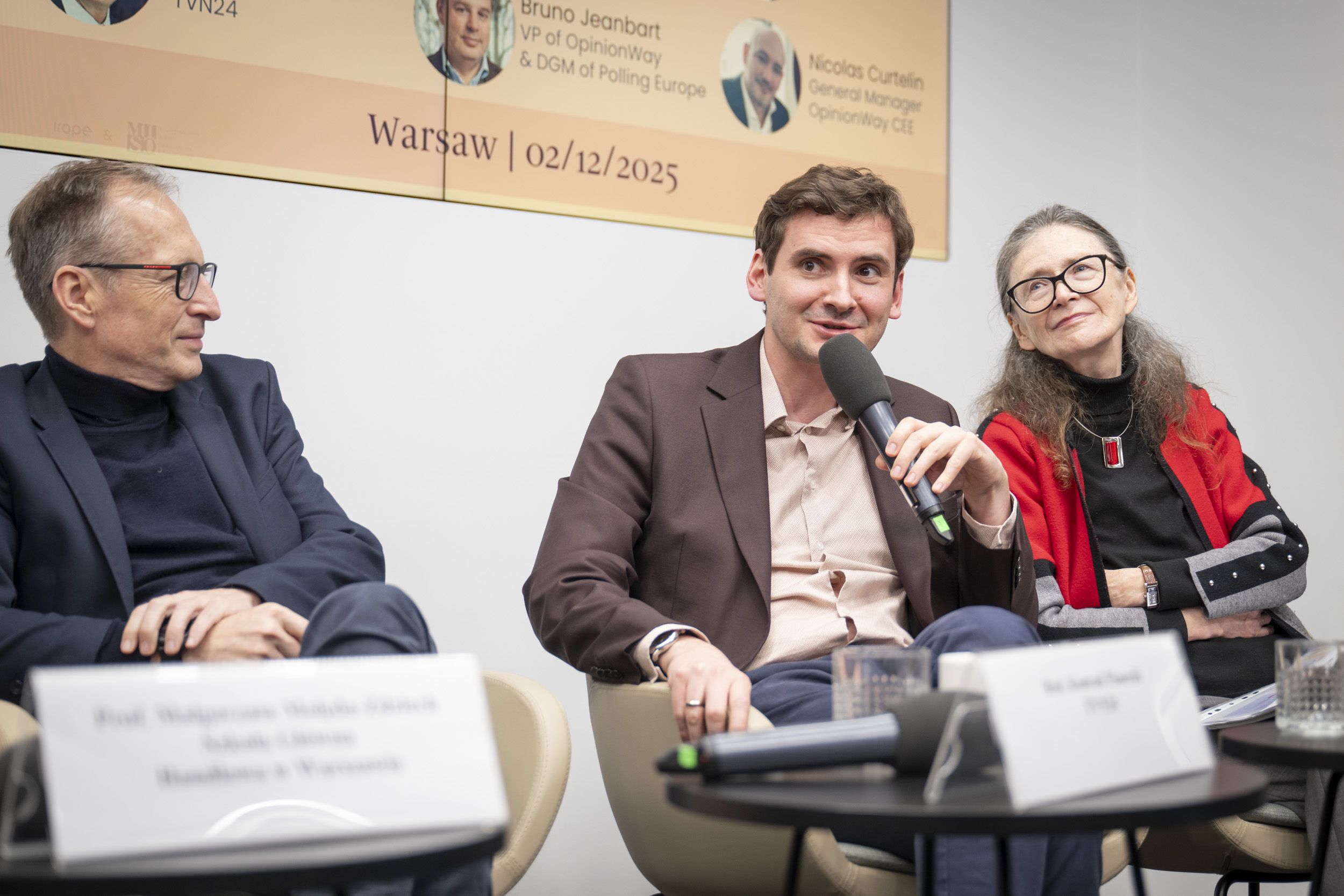
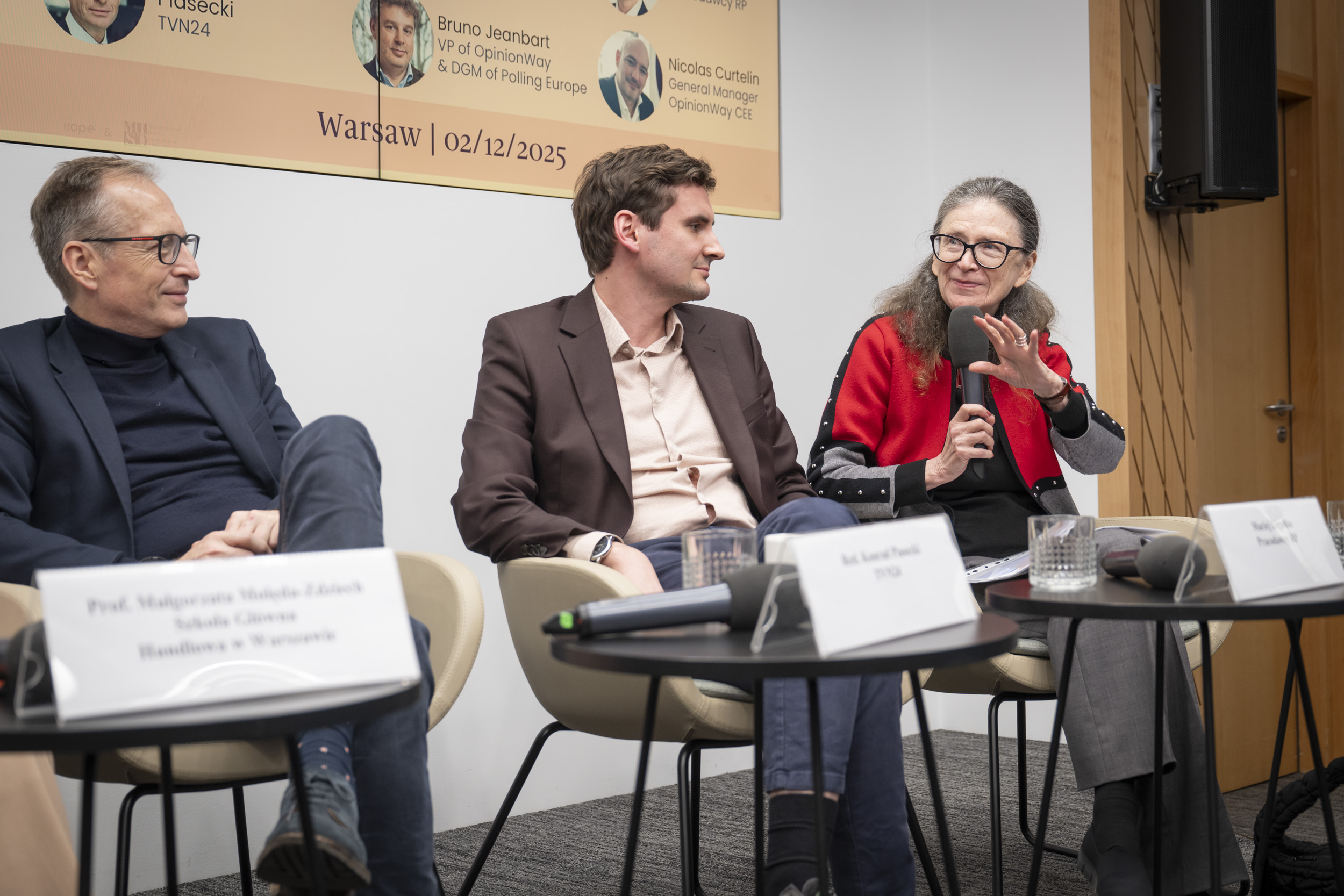
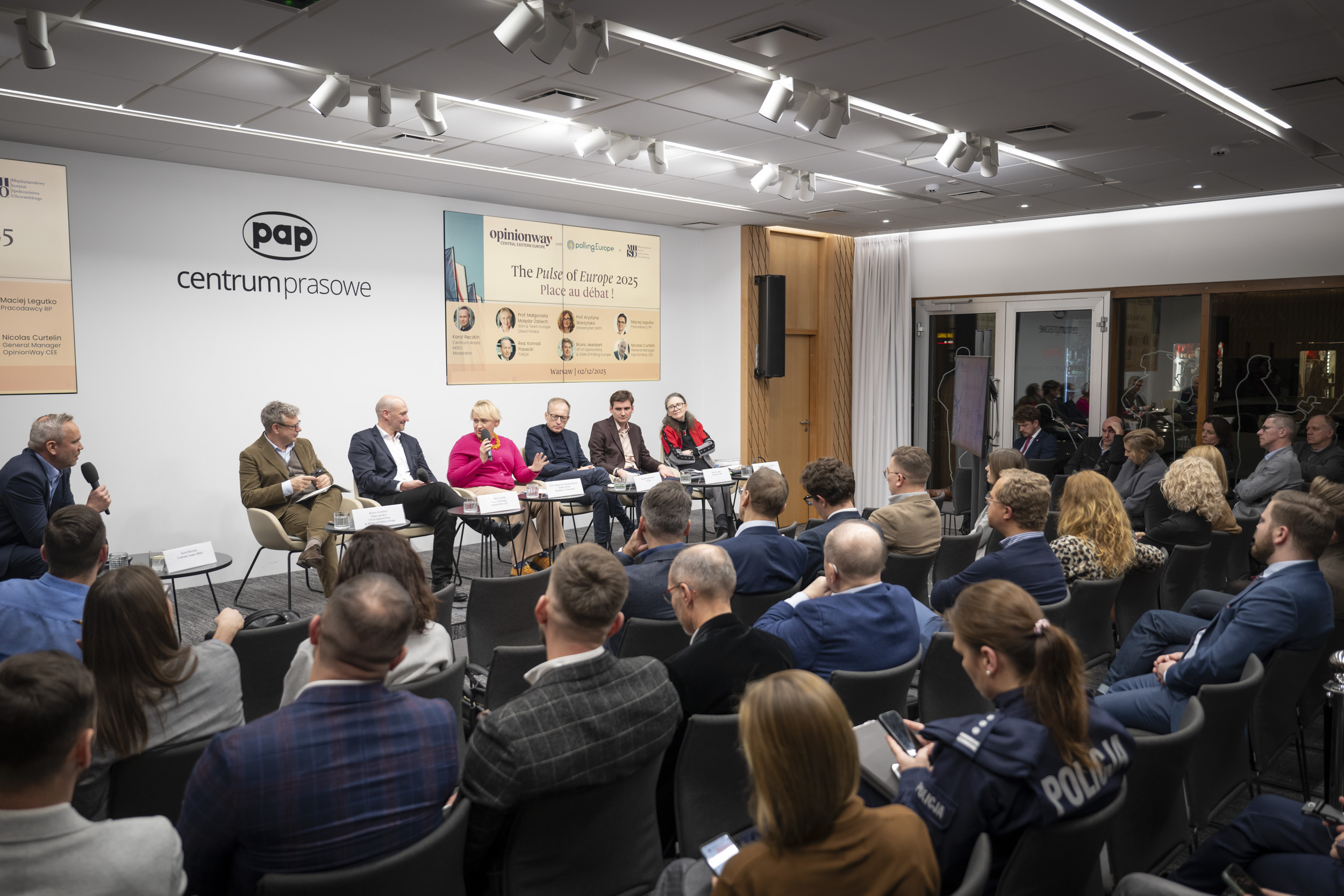
The presentation was followed by a panel discussion moderated by Karol Reczkin (MISO Analysis Centre), with the participation of Nicolas Curtelin (OpinionWay CEE), Bruno Jeanbart (OpinionWay Group & Polling Europe), Maciej Legutko (Employers of Poland), Prof. Małgorzata Molęda-Zdziech (SGH & Team Europe Direct Poland), journalist Konrad Piasecki (TVN24), and Prof. Krystyna Skarżyńska (SWPS University). The speakers highlighted the implications of Poles’ growing sense of agency for European politics, as well as the importance of security: military, economic, and informational, as a factor shaping and integrating public opinion.
Download the presentation with the full research results HERE.