
“HEALTH AT THE CENTER – THE HACK4HEALTH INITIATIVE.” KEY TAKEAWAYS FROM THE EXPERT DEBATE
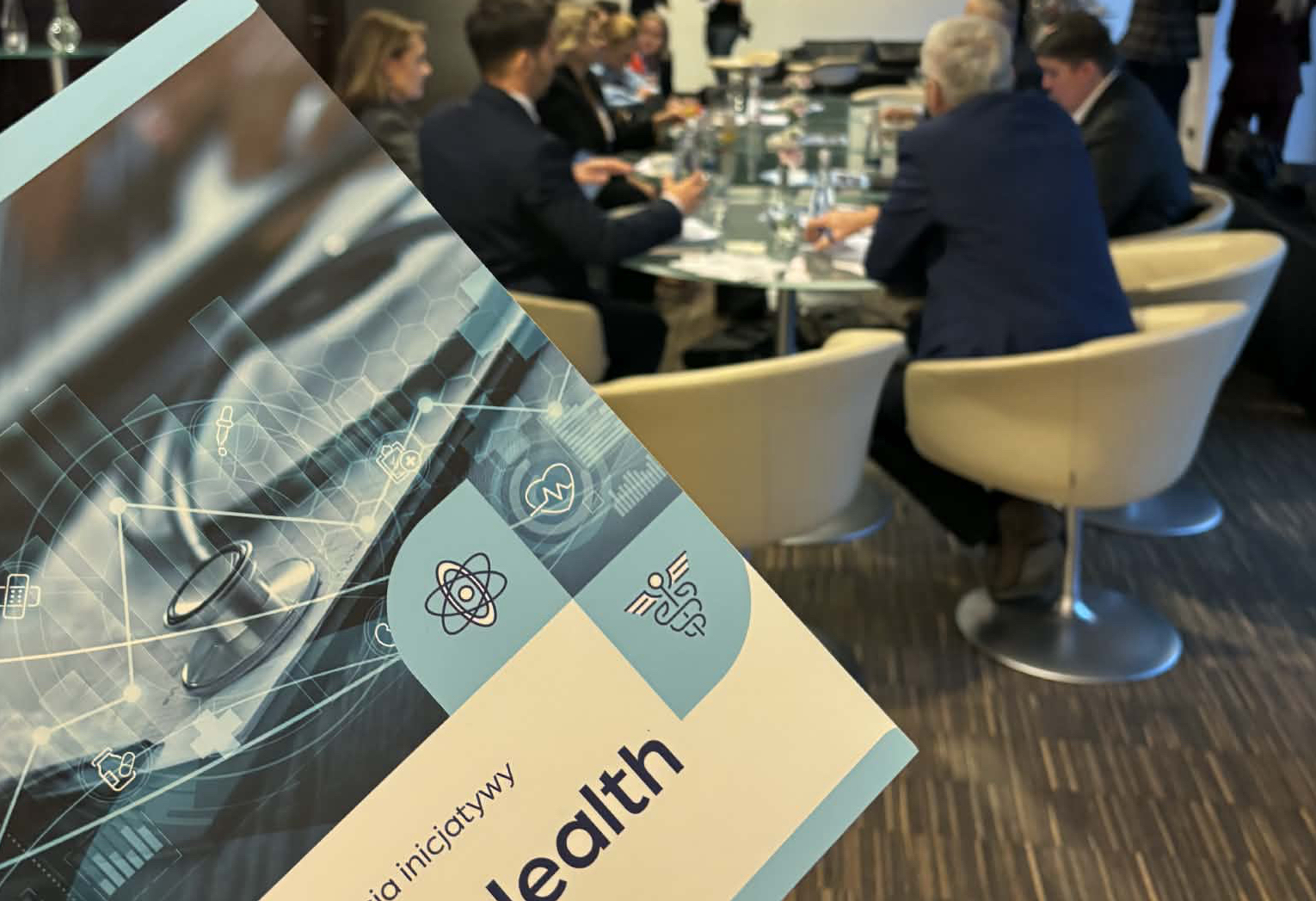
The debate focused on the role of health in public policy and on the conditions necessary to achieve real improvements in health outcomes and the financial stability of the healthcare system.
Health as the highest value – and a real challenge
Participants emphasized that health remains one of the most important social values. At the same time, Poland still faces a significant gap in health outcomes: life expectancy in Poland is approximately three years shorter than the European Union average. This means that improving population health is not merely an organizational issue but a strategic development challenge.
It was noted that the current mechanism for determining healthcare spending in relation to GDP – including the “t-2 rule,” under which expenditure levels each year are calculated based on GDP from two years earlier – does not reflect the current economic and cost-related situation. To realistically reach the 7% of GDP spending target for healthcare by 2027, further increases in funding will be necessary, along with a revision of this rule so that the allocation of resources better reflects current needs.
Participants also highlighted that since 2020 the costs of healthcare services have risen sharply. Medical inflation is estimated to be approximately 2.5 times higher than general inflation, and additional cost pressure is generated by wage regulations. Key challenges identified included insufficient revenue from health insurance contributions, increasing cost pressure, and limited system reserves.
Participants recommended increasing the transparency of financial data, systematically monitoring progress toward the 7% of GDP target, and conducting policy debates based on current and comparable indicators. Only a data-driven approach can enable a multi-stakeholder dialogue leading to lasting systemic solutions.
Health at the center of state policy
One of the strongest conclusions of the debate was that health must be treated as a priority and cross-cutting issue in state policy. It cannot remain solely the responsibility of one ministry. Decisions concerning public finances, education, the labor market, social policy, and legislation have a direct impact on the health of society.
Health should be viewed as common good and an investment with a high rate of return – in productivity, labor market participation, and social stability. In this context, the key shift is moving away from a cost-based narrative toward an investment approach: health is an investment, not a cost.
Financing: an ambitious goal and a condition for effectiveness
During the meeting, it was clearly stated that the Polish healthcare system has been underfunded for years, with per-capita spending roughly half the EU average. Participants considered it an ambitious but justified objective to bring per-capita healthcare spending closer to the level of the Czech Republic within the next two years.
However, it was emphasized that increased funding must be accompanied by:
- systematic monitoring of health outcomes;
- cost rationalization and optimization at the levels of primary care, specialist outpatient care, and hospital treatment;
- greater transparency of financial and organizational data.
Citizens’ responsibility and the role of prevention
The debate clearly highlighted the importance of citizens’ responsibility for their own health. Consistent health education and a genuine strengthening of preventive care were identified as the foundation for long-term improvements in health indicators. Without shifting the system’s focus toward preventive measures, it will be difficult to reduce cost pressures and improve the quality of life in society.
Better legislation and effective coordination
Participants stressed the need for wise legislative and administrative action that translates health policy objectives into concrete and measurable implementation measures. Efficient coordination mechanisms between institutions are essential, as is incorporating the health perspective into regulatory impact assessments in other areas of public policy.
A permanent platform for cooperation and rebuilding trust
The final, yet crucial conclusion was the need to create and maintain a permanent platform for cooperation between the state, experts, patients, and socio-economic partners. Without data-driven dialogue and shared goals, it will be difficult to implement lasting reforms.
At the same time, participants emphasized the importance of rebuilding trust in public institutions through transparency, clear communication of reform outcomes, and the consistent implementation of adopted commitments.
The debate clearly demonstrated that if health is to become a genuine pillar of Poland’s development, it must be placed at the center of public decision-making — as a strategic investment requiring shared responsibility from both the state and society.